A unique witness to cultural life at the Habsburg-Burgundian court.
The Basses danses of Margaret of Austria is a unique manuscript preserved in the vaults of the Royal Library of Belgium (KBR). It is an oblong volume measuring 12.8 x 21 cm and contains 25 black parchment folios on which text and music have been written in luxurious gold and silver ink. Owing to its artistic value and exceptional content, the manuscript is considered one of the finest examples of Burgundian-Habsburg cultural heritage.
However, the considerable scholarly and public interest in the manuscript contrasts sharply with its limited accessibility: only in exceptional circumstances does the dance book leave the secure storage facilities of KBR. A research and valorisation project initiated by the Alamire Foundation seeks to address this challenge by creating new opportunities for research, preservation, and public engagement .
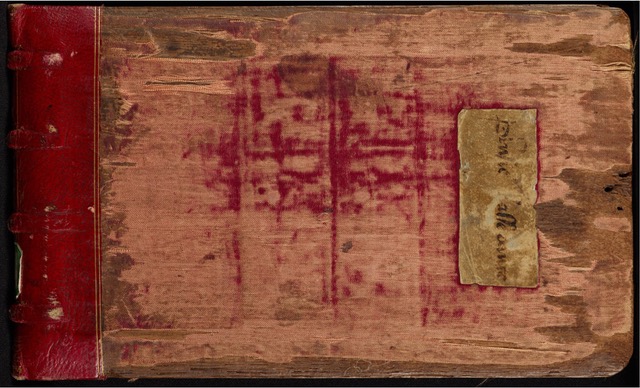
Except for its restored spine, the manuscript retains its original binding. The wooden boards are covered with red silk featuring a diamond pattern. Due to their fragility, few textile bindings from the Middle Ages and the Renaissance have survived. As soon as they showed signs of wear, they were often replaced by their owners, frequently according to personal taste.
The label on the front cover indicates the manuscript’s contents. Written in sixteenth-century script, it reads: Plusie(urs) basse danse. Although very few dance melodies have survived, the complex and refined basse danse was particularly popular at European courts in the fifteenth and sixteenth centuries. The Burgundian-Habsburg princes, their families, and their entourage were well acquainted with these “low dances”, which were characterised by controlled steps in which the feet remained in constant contact with the ground.
With its fifty-eight dances, complete with melodies and choreographic instructions, this manuscript is internationally recognised as the richest and most important source for this genre. The codex was probably compiled shortly before 1500, making it the oldest known dance book from the Low Countries.

The luxurious execution of the manuscript suggests that it was not intended solely for use by performers. The colour of the parchment was neither accidental nor incidental. In the Middle Ages, black was primarly associated with status and prestige, which likely explains its particular popularity at the Burgundian court. The manuscript’s luxurious character is further enhanced by the use of gold and silver ink and by the meticulous attention paid to the lettering and musical notation.
The Challenge
The manuscript is extremely fragile, largely due to its most striking material characteristic: the colour of the parchment. As far as is known, only three complete manuscripts on black parchment survive today. All of these sources face the same challenge: black parchment tends to crumble, meaning that every handling carries a risk of deterioration.
The recent high-resolution digitisation of the manuscript using the Alamire Foundation’s mobile Alamire Digital Lab has provided an alternative resource for research and analysis. Among its many advantages are the exceptional zoom capabilities, which offer significant added value for detailed study. In addition to its planned online publication through the Alamire Foundation’s Integrated Database for Early Music and the KBR website, the project aims to produce a new facsimile edition as port of the Leuven Library of Music in Facsimile series, meeting today’s standards for faithful reproduction.
The accompanying study, prepared by leading experts, will examine the manuscript from a variety of perspectives. It is intended not only to provide an up-to-date overview of current knowledge and insights but also to stimulate new and innovative avenues of research.
A Unique Ambassador for Research and Valorisation
New initiatives centred on the Basses danses also create valuable opportunities for outreach and valorisation. The facsimile can be used for museum purposes and will be integrated into the KBR museum, which opened in September 2020 and is dedicated to the ducal library and Burgundian-Habsburg culture. As it can be displayed on a more permanent basis, the facsimile of the Basses danses will offer visitors a tangible insight into musical life at the Burgundian-Habsburg court.
The dance book also continues to attract the attention of artists. For both choreographers and musicians working according to the principles of historically informed performance, the manuscript represents a source of exceptional importance.
How do we support them?
The research and valorisation project dedicated to the oldest known dance book from the Burgundian Netherlands is a partnership between the Alamire Fondation and AMUZ (Flanders Festival Antwerp), in collaboration with the KBR. The project is funded by the VGP Foundation and includes:
- The recruitment of a leading senior researcher;
- The production of a facsimile of the manuscript, accompanied by a scholarly study published in the Leuven Library of Music in Facsimile series;
- The documentary Basses danses and Margaret and its world premiere;
- An expert lecture;
- Concerts featuring dance performances.